<?xml version="1.0" encoding="utf-8"?>
<feed xmlns="http://www.w3.org/2005/Atom" xmlns:media="http://search.yahoo.com/mrss/">
    <title>HiskiH&#x27;s Blog</title>
    <link href="https://blog.hiskih.fi/feed.xml" rel="self" />
    <link href="https://blog.hiskih.fi" />
    <updated>2026-04-11T19:59:46+03:00</updated>
    <author>
        <name>HiskiH</name>
    </author>
    <id>https://blog.hiskih.fi</id>

    <entry>
        <title>Mobile Dungeon Task Force - Stats, Maxes and Caps</title>
        <author>
            <name>HiskiH</name>
        </author>
        <link href="https://blog.hiskih.fi/mobile-dungeon-task-force-stats-maxes-and-caps.html"/>
        <id>https://blog.hiskih.fi/mobile-dungeon-task-force-stats-maxes-and-caps.html</id>
        <media:content url="https://blog.hiskih.fi/media/posts/22/stat-cap-max.jpg" medium="image" />
            <category term="playtest"/>
            <category term="mdtf"/>
            <category term="design"/>

        <updated>2026-04-11T19:24:19+03:00</updated>
            <summary>
                <![CDATA[
                        <img src="https://blog.hiskih.fi/media/posts/22/stat-cap-max.jpg" alt="" />
                    The latest version of MDTF playtest features a stat system that combines&hellip;
                ]]>
            </summary>
        <content type="html">
            <![CDATA[
                    <p><img src="https://blog.hiskih.fi/media/posts/22/stat-cap-max.jpg" class="type:primaryImage" alt="" /></p>
                <p>The latest version of MDTF playtest features a stat system that combines Into the Odd and Vagabond // Pulp Fantasy RPG. Here's how it works:</p>
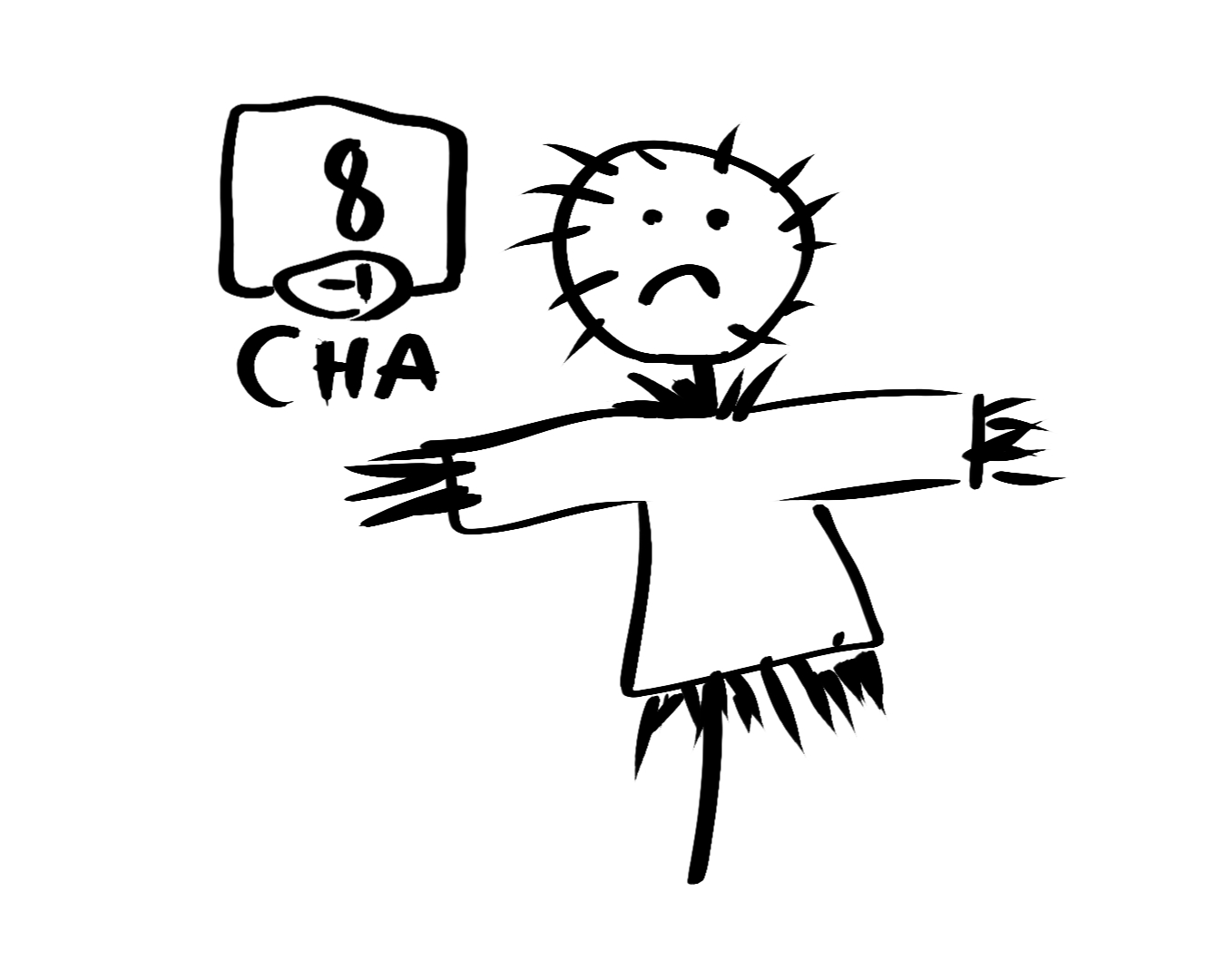
<p>You have three stats: Endurance (END), Reflex (REF) and Character (CHA). Each stat has a MAX value between 2 and 7.</p>
<p>On your character sheet each stat has a value, a MAX value and CAP value. Your MAX is the canonical value of the stat and doesn't affect play in any way. Your CAP value is the maximum value the stat can have DURING play. Your CAPs return to their MAX values when your rest.</p>
<p>So when you play, your stats might look like this:</p>
<ul style="list-style-type: square;">
<li>END 4 / 7  (MAX 7)</li>
<li>REF 3 / 5  (MAX 5)</li>
<li>CHA 6 / 6  (MAX 6)</li>
</ul>
<p>Your END acts as your health, so when you take damage you reduce your END score. </p>
<p>END 4 / 7 -&gt; END 2 / 7</p>
<p>Your REF and CHA are resources you can use to do certain special actions.</p>
<p>REF 3 / 5 -&gt; REF 2 / 5 (to make a special aimed shot with a firearm)</p>
<p>Here's where things get interesting. If you take more damage than you have remaining in your END stat you must reduce a CAP for the excess damage. Lets say you take 5 damage.</p>
<p>END 2 / 7 -&gt; END 0 / 7</p>
<p>Now you have to reduce the CAP of either END, REF or CHA by the excess amount (here it would be 3 points). You choose CHA.</p>
<p>CHA 6 / 6  -&gt; CHA 3 / 3</p>
<p>Your CAP was lowered, so your score goes down too. Because you didn't spend these points before they are now lost.</p>
<h2>The Box Version</h2>
<p>This post was prompted by a friend of mine coming up with a brilliant representation of this system. Imagine each of your stats as a box. The number of boxes represents the MAX of the stat.</p>
<ul>
<li>END <span class="emz">☐</span><span class="emz">☐</span><span class="emz">☐</span><span class="emz">☐</span><span class="emz">☐</span><span class="emz">☐</span><span class="emz">☐</span></li>
<li>REF <span class="emz">☐</span><span class="emz">☐</span><span class="emz">☐</span><span class="emz">☐</span><span class="emz">☐</span></li>
<li>CHA <span class="emz">☐</span><span class="emz">☐</span><span class="emz">☐</span><span class="emz">☐</span><span class="emz">☐</span><span class="emz">☐</span></li>
</ul>
<p><span style="color: var(--text-primary-color); font-family: var(--editor-font-family); font-size: inherit; font-weight: var(--font-weight-normal);">During play your boxes might look like this after taking 3 damage and spending 2 REF points:</span></p>
<ul>
<li>END <span class="emz">☐</span><span class="emz">☐</span><span class="emz">☐</span><span class="emz">☐☑☑☑</span></li>
<li>REF <span class="emz">☐</span><span class="emz">☐</span><span class="emz">☐☑☑</span></li>
<li>CHA <span class="emz">☐</span><span class="emz">☐</span><span class="emz">☐</span><span class="emz">☐</span><span class="emz">☐</span><span class="emz">☐</span></li>
</ul>
<p>Now you take 8 damage. You fill in your END boxes, and cross off the remainder from any of the stats.</p>
<ul>
<li>END <span class="emz">☑☑☑</span><span class="emz">☑☑☑☒</span></li>
<li>REF <span class="emz">☐</span><span class="emz">☐☐☒</span><span class="emz">☒</span></li>
<li>CHA <span class="emz">☐</span><span class="emz">☐</span><span class="emz">☐</span><span class="emz">☐</span><span class="emz">☐☒</span></li>
</ul>
<p>You've chosen to reduce your maximum healt by one and reduce your CHA by one but also used the already spent REF points without losing any remaining points. Now the combat is over and you heal your health back.</p>
<ul>
<li>END ☐<span class="emz" style="color: var(--text-primary-color); font-family: var(--editor-font-family); font-size: inherit; font-weight: var(--font-weight-normal);">☐☐</span>☐<span class="emz" style="color: var(--text-primary-color); font-family: var(--editor-font-family); font-size: inherit; font-weight: var(--font-weight-normal);">☐☐</span><span class="emz" style="color: var(--text-primary-color); font-family: var(--editor-font-family); font-size: inherit; font-weight: var(--font-weight-normal);">☒</span></li>
<li>REF <span class="emz">☐</span><span class="emz">☐☐☒</span><span class="emz">☒</span></li>
<li>CHA <span class="emz">☐</span><span class="emz">☐</span><span class="emz">☐</span><span class="emz">☐</span><span class="emz">☐☒</span></li>
</ul>
<p>So when do you die? When your END pool is fully crossed off.</p>
<p>The benefit of this idea is that it forces you to use your points. Sure you can save your REF and CHA points for a bad day but if you ever take more damage than you can handle, and rest assured you certainly will, some of those saved points will be lost.</p>
<p>The game is not currently available anywhere but you can follow me on <a href="https://bsky.app/profile/hiskih.fi">Bluesky</a> or <a href="https://hiskih.itch.io">Itch</a> to be the first to know when a playable version is out. Cheers!</p>
            ]]>
        </content>
    </entry>
    <entry>
        <title>All Hail the NWoHF</title>
        <author>
            <name>HiskiH</name>
        </author>
        <link href="https://blog.hiskih.fi/all-hail-the-nwohf.html"/>
        <id>https://blog.hiskih.fi/all-hail-the-nwohf.html</id>
        <media:content url="https://blog.hiskih.fi/media/posts/21/nwohf-2.jpg" medium="image" />
            <category term="nwohf"/>

        <updated>2026-03-27T14:37:58+02:00</updated>
            <summary>
                <![CDATA[
                        <img src="https://blog.hiskih.fi/media/posts/21/nwohf-2.jpg" alt="" />
                    Due to some recent developments I’m conceding the NWOF label for the&hellip;
                ]]>
            </summary>
        <content type="html">
            <![CDATA[
                    <p><img src="https://blog.hiskih.fi/media/posts/21/nwohf-2.jpg" class="type:primaryImage" alt="" /></p>
                <p>Due to some recent developments I’m conceding the NWOF label for the NWoHF acronym. This post contains a short history on the whole thing as well as my thoughts on it now.</p><p>This all happened on the NSR Cauldron Discord. In late 2025 <em>Brandon</em> said something about “a new wave of heroic fantasy” which <em>ordinal</em> coined as NWoHF (the o used to be capitalized but shrunk down at some point). Me and <em>Window Dump</em> jumped in on the discussion and over time agreed upon the outlines of this phenomenon.</p><p>I believed the acronym was too complex (and I still do) so I wrote my own series of blog posts on the NWOF, New Wave of Fantasy (see <a href="https://blog.hiskih.fi/new-wave-of-fantasy-nwof.html">original definition</a>, <a href="https://blog.hiskih.fi/more-on-the-nwof.html">additional discussion</a> and <a href="https://blog.hiskih.fi/the-nwof-promise.html">the NWOF promise</a>) mainly because I wanted to include <em>Vagabond // Pulp Fantasy RPG</em> and <em>Legend in the Mist - a rustic fantasy RPG</em> under the label.</p><p>I’m finally throwing in the towel and conceding the Heroic H is important. I’ve since learned that both <em>Vagabond</em> and <em>Legend in the Mist</em> call their characters Heroes. All of my counter examples have vanished so I have to conclude that NWoHF is the superior label. Admittedly shrinking down the o helped. Can we still pronounce it as <em>en-wof</em>?
The rest of this post is an updated combination of my previous posts trying to explain what the NWoHF is.</p><h2 id="defining-the-nwohf-again">Defining the NWoHF (again)</h2>
<blockquote>
<p>NWOF games feel like 5e DnD narratively but not mechanically</p></blockquote>
<h3 id="nwohf-games-are-often">NWoHF games are often:</h3>
<ul>
<li>fantasy games influenced by DnD 5e</li>
<li>made after or in response to the OGL fiasco</li>
<li>heroic and kitchen-sink fantasy</li>
<li>speaking to the 5e audience, sometimes unintentionally</li>
</ul>
<p>The games sit somewhere between NSR games and 5e. Usually more complex than the OSR tradition but many are quite simplified from the full 5e package.</p><pre class="mermaid">flowchart LR
    B/X --- OSR --- NSR --- NWoHF --- 5e
</pre>
<h3 id="some-nwohf-games">Some NWoHF games</h3>
<ul>
<li>Daggerheart</li>
<li>Nimble</li>
<li>DC20</li>
<li>Draw Steel</li>
<li>Grimwild</li>
<li>Cosmere RPG</li>
<li>Legend in the Mist </li>
<li>Vagabond // Pulp Fantasy RPG</li>
</ul>
<p>Here’s what I think you can expect when you play an NWoHF game:</p><ul>
<li>Relatively simple rules and resolution mechanics yet often complex character building.</li>
<li>You play as a protagonistic hero with implied growth towards saving something important to you, oftentimes the world.</li>
<li>Fiction first rules with some amount of storytelling mechanics behind them.</li>
<li>The game caters to a specific style of play within the heroic fantasy genre with some games focusing on storytelling and others on crunchy combat.</li>
<li>Focus on characters, personal stories and exploring the world created by the GM. Sometimes the players also build parts of the world.</li>
<li>A mix of ideas from various traditions from OSR to PbtA.</li>
</ul>
<h3 id="nwohf-vs-heartbreaker">NWoHF vs Heartbreaker</h3>
<p>One can ask if NWoHF is just a new name for the fantasy heartbreaker. In a way yes, a game can be both an NWoHF game and a heartbreaker but they do still differ in my mind. A heartbreaker is a game that is trying to be <em>Dungeons &amp; Dragons</em> whereas an NWoHF game is doing its own thing in the same genre of heroic fantasy. Heartbreakers are inspired by the D&amp;D books but NWoHF games tend to be more inspired by the stories people tell with 5e on actual play shows and other media.</p><p>Remember that labels and definitions are tools for communication. They help us hone in on what parts we find valuable, interesting or worthwhile. I don’t consider NWoHF to be a sole definer of a game or a proper genre though if someone were to ask me to play an NWoHF game I think I would have a solid idea what to expect. Whether a particular game fits or doesn’t fit the label is ultimately not that important.</p>
            ]]>
        </content>
    </entry>
    <entry>
        <title>I Used to Dislike Tea</title>
        <author>
            <name>HiskiH</name>
        </author>
        <link href="https://blog.hiskih.fi/i-used-to-dislike-tea.html"/>
        <id>https://blog.hiskih.fi/i-used-to-dislike-tea.html</id>
        <media:content url="https://blog.hiskih.fi/media/posts/19/leafwater.jpg" medium="image" />

        <updated>2026-03-04T20:31:37+02:00</updated>
            <summary>
                <![CDATA[
                        <img src="https://blog.hiskih.fi/media/posts/19/leafwater.jpg" alt="" />
                    Do you think tea tastes like water and grass? Do you find&hellip;
                ]]>
            </summary>
        <content type="html">
            <![CDATA[
                    <p><img src="https://blog.hiskih.fi/media/posts/19/leafwater.jpg" class="type:primaryImage" alt="" /></p>
                <p>Do you think tea tastes like water and grass? Do you find yourself completely indifferent to the concept of leaf-flavored water? That was me, and if that is you, let me tell you how I figured out tea over the past year.</p>
<p>I do not like <em>green tea,</em> it tastes like grass.</p>
<p>I tolerate <em>black tea, </em>it has a flavor...sort of... somewhere.</p>
<p>And those two basic boring bitches are most of the tea you get exposed to. If you like them I'm happy for you, and honestly a bit jealous of your ability to enjoy the most popular tea flavors.</p>
<p>For me everything changed when I bought a hand-crafted packet of various flavors of tea. And I don't mean various flavorings of <em>black tea, </em>I mean various types of tea, pure and unflavored.</p>
<p>Before you try to find your favorite seasoning from blueberries to lemongrass, you should try various types of tea because there are tons. And the base flavor of the various tea types is suuuper important. If you find one that you like you can further tweak it with additional flavorings.</p>
<p>So I've found two types of tea I like: <em>pu-erh</em> and <em>oolong. </em>Yes, of course they are more expensive than your basic <em>black</em> and <em>green.</em></p>
<p><em>Pu-erh </em>is fermented tea, kinda. It's strong and usually not recommended for first-timers. For me it was perfect, because finally tea had a proper taste beyond lightly flavored water. If you find basic teas kinda flavorless, consider picking up <em>pu-erh. </em>I specifically enjoy <em>fruity pu-erh </em>which has, you guessed it, fruits in it. Makes it a bit softer and, well, fruitier.</p>
<p>And my new find I'm still learning about, <em>oolong, </em>specifically <em>four-seasons oolong. </em>I tried it once and immediately went to get more. That particular <em>oolong</em> was incredible, it was mellow like <em>green</em> but did not taste like grass. It had almost a sweet aftertaste to it despite having nothing besides tea-leaves in it. A great find if you dislike bitter or grassy teas.</p>
<p>Finally, the market variety teas. Many swear on the more expensive loose-leaf teas sold in specialty shops. I can't really say if hand pouring on your loose-leaves is truly that much better but I have found much enjoyment in the process. Making a trip to a teashop to explore the various specialties is much more likely to find you a tea that you like than whatever they put in the mass-market teabags.</p>
<p>My friends that pushed me to properly explore the world of teas were correct. If you don't like tea, you just havent found the one for you. Or you prefer coffee, I suppose. So get yourself a cheap strainer and small pouches of various loose-leaves. Initially it will cost you maybe 10 to 20 bucks. Soon you will be splurging on the expensive limited-season premiums, I'm sure.</p>
            ]]>
        </content>
    </entry>
    <entry>
        <title>Mobile Dungeon TaskForce - Playtest Report 2</title>
        <author>
            <name>HiskiH</name>
        </author>
        <link href="https://blog.hiskih.fi/mobile-dungeon-taskforce-playtest-report-2.html"/>
        <id>https://blog.hiskih.fi/mobile-dungeon-taskforce-playtest-report-2.html</id>
        <media:content url="https://blog.hiskih.fi/media/posts/17/engrave-test.png" medium="image" />
            <category term="playtest"/>
            <category term="mdtf"/>

        <updated>2026-02-25T23:19:41+02:00</updated>
            <summary>
                <![CDATA[
                        <img src="https://blog.hiskih.fi/media/posts/17/engrave-test.png" alt="" />
                    Aight second playtest down. For those new here, MDTF is a game&hellip;
                ]]>
            </summary>
        <content type="html">
            <![CDATA[
                    <p><img src="https://blog.hiskih.fi/media/posts/17/engrave-test.png" class="type:primaryImage" alt="" /></p>
                <p>Aight second playtest down. For those new here, MDTF is a game where spec ops soldiers fight fantasy dungeons. Simple OSR-style rules and compatibility with existing OSR adventures.</p>
<h2>What Works</h2>
<ul>
<li>The basic Mark of the Odd core combined with ideas from Vagabond is still great.</li>
<li>The game features only 4 weapons but they feel distinct and interesting despite simple rules. Adding little modifiers like shotguns being short but AOE and snipers being long-distance but powerful force varying playstyles well.</li>
<li>Shadow of the Demon Lord style initiative over side-based initiative introduced fun tactical elements without bogging down play. I toyed around with a 3-action combat economy which was certainly crunchier but I think lean but tactical is more fitting for the game.</li>
<li>New story framing. Instead of fighting dungeons that are summoned by cultists, players fight the god of stories that is bringing fiction to life one dungeon at a time. More varied dungeons, a proper world-ending threat and overall more fun.</li>
<li>Vagabond-style saves against damage. Players always hit but will roll to avoid enemy attacks. Players have very little healt but doing well with saving throws allows them to feel special and stay alive.</li>
<li>STATs, CAPs, MAXes and SAVEs. I'll reserve a whole section explaining this system.</li>
</ul>
<h2>STATS, CAPS, etc.</h2>
<p>What I have created is a funky combination of Into the Odd and Vagabond. Here's how it works:</p>
<ul>
<li>You have three stats: Endurance, Reflex and Character</li>
<li>Each stat is a number between 2 and 7, a'la Vagabond. This is the MAX of the stat. The CAP of the STAT and the stat itself start here too.</li>
<li>For SAVES you roll a d20 and try to hit [20 - (2xSTAT)]. Classic saving throw stuff with precalculated static DC. Easy for the modern audience that likes to roll high.</li>
<li>Your stats are also resources. Endurance is your health and Character is your luck points for rerolls, asking free questions from the GM, pulling grenades out of your pocket etc.</li>
<li>Your Endurance resets after each combat to its CAP.</li>
<li>If your Endurance goes below 0 the remaining damage is reduced from the CAPs of your stats.</li>
<li>If a CAP goes below the current value of the STAT, the STAT also reduces (not MAXes or SAVEs though).</li>
<li>Your Character resets between adventures.</li>
<li>If your CAPs go to 0 you die.</li>
</ul>
<p>Why is this cool? It's super simple once set up. You have your health and resources (Reflex will also feature use cases) that are small enough that you can't just spam them. But when you do take damage you must choose if you want to heal to a lower maximum or reduce your resources. Optimally you would spend your resources a little to give you a buffer against damage, preventing you from holding on to them too long. But spending them all on an encounter is also not that wise because this game can be pretty lethal.</p>
<h2>What Didn't Work</h2>
<ul>
<li>Players did not spend Reflex points on Mythic Bastionland style gambits. Next up is gonna be a test for a called shot table utilizing the classic d12-shaped bodypart targeting die that is sold in some stores.</li>
<li>Character points cannot be used on rerolls because then you should always reroll when you are at risk of losing your CAP. Some kind of rerolls might still be needed because Vagabond-style saves can suffer from bad luck.</li>
<li>Dungeons only exist when there are witnesses. I wanted players to extract the civilians safely. But after they did they considered just dying so there is no-one to see the dungeon anymore. So I'm gonna figure out what incentives I can put in the narrative for them to fight like hell.</li>
<li>Guns had mods where each gun would have various types of attachments. This was fun but the added complexity might not be worth it as I found myself having to come up with more mods than I had inspiration for. Next test will feature simpler guns again, complexity can be brought in later.</li>
<li>I've decided to not care about XP for the time being. Leveling up is a future problem after the core works. Perhaps you get +1 HP per level or reroll a stat or something.</li>
</ul>
<p>The game is not currently available anywhere but you can follow me on <a href="https://bsky.app/profile/hiskih.fi">Bluesky</a> or <a href="https://hiskih.itch.io">Itch</a> to be the first to know when a playable version is out. Cheers!</p>
            ]]>
        </content>
    </entry>
    <entry>
        <title>Cities: Quick Size Reference</title>
        <author>
            <name>HiskiH</name>
        </author>
        <link href="https://blog.hiskih.fi/cities-quick-size-reference.html"/>
        <id>https://blog.hiskih.fi/cities-quick-size-reference.html</id>
        <media:content url="https://blog.hiskih.fi/media/posts/16/cities.math-2.jpg" medium="image" />
            <category term="math"/>

        <updated>2026-02-17T23:20:12+02:00</updated>
            <summary>
                <![CDATA[
                        <img src="https://blog.hiskih.fi/media/posts/16/cities.math-2.jpg" alt="" />
                    We know fantasy worlds have villages, towns and cities. But how big&hellip;
                ]]>
            </summary>
        <content type="html">
            <![CDATA[
                    <p><img src="https://blog.hiskih.fi/media/posts/16/cities.math-2.jpg" class="type:primaryImage" alt="" /></p>
                <p>We know fantasy worlds have villages, towns and cities. But how big exactly are they? I didn't do the math, so here's some extreme simplifications for your convenience.</p>
<h1>Medieval</h1>
<p class="msg msg--info"><strong>Village<br></strong>Population: 200<br>Size: 1 ha<br>Approximately: the area inside of a 400m sports track</p>
<p class="msg msg--info"><strong>Town</strong><br>Population: 2,500<br>Size: 15 ha<br>Approximately: Ellis Island (11ha) + Liberty Island (5.5 ha), New York (USA) </p>
<p class="msg msg--info"><strong>City</strong><br>Population: 10,000<br>Size: 65 ha<br>Approximately: The area of Disneyland Park, California (USA) or Vatican City</p>
<p class="msg msg--info"><strong>Large City</strong><br>Population: 50,000<br>Size: 300 ha<br>Approximately: The area of Central Park, New York (USA) or Medieval Paris</p>
<p class="msg msg--info"><strong>Metropolis</strong><br>Population: 100,000 - 1 million<br>Size: varies<br>Approximately: Medieval Constantinople, Rome or Baghdad</p>
<p class="msg msg--highlight "><strong>Approximations</strong><br>The above are approximations of medieval statistics. You can adjust these sizes by doubling or halving the population or area to create dense or scarce locations. The numbers are based on <a href="https://ia600909.us.archive.org/28/items/medieval-demographics-made-easy/Medieval-Demographics-Made-Easy.pdf">Medieval Demographics Made Easy</a> by S. John Ross.</p>
<h1>Modern</h1>
<p class="msg msg--info"><strong>Village</strong><br>Population: 1000<br>Size: 0.5 km²<br>Approximately: Blockley, Gloucestershire, England</p>
<p class="msg msg--info"><strong>Town</strong><br>Population: 10,000<br>Size: 20 km²<br>Approximately: Pélissann, Aix-en-Provence, France</p>
<p class="msg msg--info"><strong>Large Town</strong><br>Population: 50,000<br>Size: 50 km²<br>Approximately: Woodstock, Ontario, Canada</p>
<p class="msg msg--info"><strong>City</strong><br>Population: 250,000<br>Size: 100 km²<br>Approximately: Stoke-on-Trent, Staffordshire, England</p>
<p class="msg msg--info"><strong>Conurbation</strong><br>Population: 3 million<br>Size: 350,000 km²<br>Approximately: City of Berlin, Germany </p>
<p class="msg msg--highlight "><strong>Approximations</strong><br>The above are approximations based on statistics from real-life Earth. The locations have kept their populations approximately the same between years 2010 to 2020, so unless major population changes have happened they should still look relatively correct.</p>
<h1>Need a City?</h1>
<table style="border-collapse: collapse; width: 100%; height: 631.312px;" border="1">
<tbody>
<tr style="height: 48.5625px;">
<td style="width: 10.271%; height: 48.5625px;" align="left" height="17" data-sheets-value="{ &quot;1&quot;: 2, &quot;2&quot;: &quot;d12&quot;}"><strong>d12</strong></td>
<td style="width: 26.2482%; height: 48.5625px;" align="left" data-sheets-value="{ &quot;1&quot;: 2, &quot;2&quot;: &quot;Location&quot;}"><strong>Location</strong></td>
<td style="width: 28.388%; height: 48.5625px;" align="left" data-sheets-value="{ &quot;1&quot;: 2, &quot;2&quot;: &quot;Nearby&quot;}"><strong>Nearby</strong></td>
<td style="width: 35.0927%; height: 48.5625px;" align="left" data-sheets-value="{ &quot;1&quot;: 2, &quot;2&quot;: &quot;Founded for&quot;}"><strong>Founded for</strong></td>
</tr>
<tr style="height: 48.5625px;">
<td style="width: 10.271%; height: 48.5625px;" align="left" height="17" data-sheets-value="{ &quot;1&quot;: 2, &quot;2&quot;: &quot;1&quot;}">1</td>
<td style="width: 26.2482%; height: 48.5625px;" align="left" data-sheets-value="{ &quot;1&quot;: 2, &quot;2&quot;: &quot;Coast&quot;}">Coast</td>
<td style="width: 28.388%; height: 48.5625px;" align="left" data-sheets-value="{ &quot;1&quot;: 2, &quot;2&quot;: &quot;Caves&quot;}">Caves</td>
<td style="width: 35.0927%; height: 48.5625px;" align="left" data-sheets-value="{ &quot;1&quot;: 2, &quot;2&quot;: &quot;Arcane significance&quot;}">Arcane significance</td>
</tr>
<tr style="height: 48.5625px;">
<td style="width: 10.271%; height: 48.5625px;" align="left" height="17" data-sheets-value="{ &quot;1&quot;: 2, &quot;2&quot;: &quot;2&quot;}">2</td>
<td style="width: 26.2482%; height: 48.5625px;" align="left" data-sheets-value="{ &quot;1&quot;: 2, &quot;2&quot;: &quot;Forest&quot;}">Forest</td>
<td style="width: 28.388%; height: 48.5625px;" align="left" data-sheets-value="{ &quot;1&quot;: 2, &quot;2&quot;: &quot;Cliffs&quot;}">Cliffs</td>
<td style="width: 35.0927%; height: 48.5625px;" align="left" data-sheets-value="{ &quot;1&quot;: 2, &quot;2&quot;: &quot;Cultural significance&quot;}">Cultural significance</td>
</tr>
<tr style="height: 48.5625px;">
<td style="width: 10.271%; height: 48.5625px;" align="left" height="17" data-sheets-value="{ &quot;1&quot;: 2, &quot;2&quot;: &quot;3&quot;}">3</td>
<td style="width: 26.2482%; height: 48.5625px;" align="left" data-sheets-value="{ &quot;1&quot;: 2, &quot;2&quot;: &quot;Hills&quot;}">Hills</td>
<td style="width: 28.388%; height: 48.5625px;" align="left" data-sheets-value="{ &quot;1&quot;: 2, &quot;2&quot;: &quot;Dunes&quot;}">Dunes</td>
<td style="width: 35.0927%; height: 48.5625px;" align="left" data-sheets-value="{ &quot;1&quot;: 2, &quot;2&quot;: &quot;Easy to defend&quot;}">Easy to defend</td>
</tr>
<tr style="height: 48.5625px;">
<td style="width: 10.271%; height: 48.5625px;" align="left" height="17" data-sheets-value="{ &quot;1&quot;: 2, &quot;2&quot;: &quot;4&quot;}">4</td>
<td style="width: 26.2482%; height: 48.5625px;" align="left" data-sheets-value="{ &quot;1&quot;: 2, &quot;2&quot;: &quot;Island&quot;}">Island</td>
<td style="width: 28.388%; height: 48.5625px;" align="left" data-sheets-value="{ &quot;1&quot;: 2, &quot;2&quot;: &quot;Forest&quot;}">Forest</td>
<td style="width: 35.0927%; height: 48.5625px;" align="left" data-sheets-value="{ &quot;1&quot;: 2, &quot;2&quot;: &quot;Favorable climate&quot;}">Favorable climate</td>
</tr>
<tr style="height: 48.5625px;">
<td style="width: 10.271%; height: 48.5625px;" align="left" height="17" data-sheets-value="{ &quot;1&quot;: 2, &quot;2&quot;: &quot;5&quot;}">5</td>
<td style="width: 26.2482%; height: 48.5625px;" align="left" data-sheets-value="{ &quot;1&quot;: 2, &quot;2&quot;: &quot;Lakeside&quot;}">Lakeside</td>
<td style="width: 28.388%; height: 48.5625px;" align="left" data-sheets-value="{ &quot;1&quot;: 2, &quot;2&quot;: &quot;Hills&quot;}">Hills</td>
<td style="width: 35.0927%; height: 48.5625px;" align="left" data-sheets-value="{ &quot;1&quot;: 2, &quot;2&quot;: &quot;Fertile land&quot;}">Fertile land</td>
</tr>
<tr style="height: 48.5625px;">
<td style="width: 10.271%; height: 48.5625px;" align="left" height="17" data-sheets-value="{ &quot;1&quot;: 2, &quot;2&quot;: &quot;6&quot;}">6</td>
<td style="width: 26.2482%; height: 48.5625px;" align="left" data-sheets-value="{ &quot;1&quot;: 2, &quot;2&quot;: &quot;Mountainside&quot;}">Mountainside</td>
<td style="width: 28.388%; height: 48.5625px;" align="left" data-sheets-value="{ &quot;1&quot;: 2, &quot;2&quot;: &quot;Lake&quot;}">Lake</td>
<td style="width: 35.0927%; height: 48.5625px;" align="left" data-sheets-value="{ &quot;1&quot;: 2, &quot;2&quot;: &quot;Natural resources&quot;}">Natural resources</td>
</tr>
<tr style="height: 48.5625px;">
<td style="width: 10.271%; height: 48.5625px;" align="left" height="17" data-sheets-value="{ &quot;1&quot;: 2, &quot;2&quot;: &quot;7&quot;}">7</td>
<td style="width: 26.2482%; height: 48.5625px;" align="left" data-sheets-value="{ &quot;1&quot;: 2, &quot;2&quot;: &quot;Plains&quot;}">Plains</td>
<td style="width: 28.388%; height: 48.5625px;" align="left" data-sheets-value="{ &quot;1&quot;: 2, &quot;2&quot;: &quot;Mountains&quot;}">Mountains</td>
<td style="width: 35.0927%; height: 48.5625px;" align="left" data-sheets-value="{ &quot;1&quot;: 2, &quot;2&quot;: &quot;Religious significance&quot;}">Religious significance</td>
</tr>
<tr style="height: 48.5625px;">
<td style="width: 10.271%; height: 48.5625px;" align="left" height="17" data-sheets-value="{ &quot;1&quot;: 2, &quot;2&quot;: &quot;8&quot;}">8</td>
<td style="width: 26.2482%; height: 48.5625px;" align="left" data-sheets-value="{ &quot;1&quot;: 2, &quot;2&quot;: &quot;Plaeau&quot;}">Plaeau</td>
<td style="width: 28.388%; height: 48.5625px;" align="left" data-sheets-value="{ &quot;1&quot;: 2, &quot;2&quot;: &quot;River&quot;}">River</td>
<td style="width: 35.0927%; height: 48.5625px;" align="left" data-sheets-value="{ &quot;1&quot;: 2, &quot;2&quot;: &quot;Ruins of an an old city&quot;}">Ruins of an an old city</td>
</tr>
<tr style="height: 48.5625px;">
<td style="width: 10.271%; height: 48.5625px;" align="left" height="17" data-sheets-value="{ &quot;1&quot;: 2, &quot;2&quot;: &quot;9&quot;}">9</td>
<td style="width: 26.2482%; height: 48.5625px;" align="left" data-sheets-value="{ &quot;1&quot;: 2, &quot;2&quot;: &quot;Peninsula&quot;}">Peninsula</td>
<td style="width: 28.388%; height: 48.5625px;" align="left" data-sheets-value="{ &quot;1&quot;: 2, &quot;2&quot;: &quot;Sinkhole&quot;}">Sinkhole</td>
<td style="width: 35.0927%; height: 48.5625px;" align="left" data-sheets-value="{ &quot;1&quot;: 2, &quot;2&quot;: &quot;Settlers arrived here&quot;}">Settlers arrived here</td>
</tr>
<tr style="height: 48.5625px;">
<td style="width: 10.271%; height: 48.5625px;" align="left" height="17" data-sheets-value="{ &quot;1&quot;: 2, &quot;2&quot;: &quot;10&quot;}">10</td>
<td style="width: 26.2482%; height: 48.5625px;" align="left" data-sheets-value="{ &quot;1&quot;: 2, &quot;2&quot;: &quot;River delta&quot;}">River delta</td>
<td style="width: 28.388%; height: 48.5625px;" align="left" data-sheets-value="{ &quot;1&quot;: 2, &quot;2&quot;: &quot;Volcanic&quot;}">Volcanic</td>
<td style="width: 35.0927%; height: 48.5625px;" align="left" data-sheets-value="{ &quot;1&quot;: 2, &quot;2&quot;: &quot;Strategic location &quot;}">Strategic location </td>
</tr>
<tr style="height: 48.5625px;">
<td style="width: 10.271%; height: 48.5625px;" align="left" height="17" data-sheets-value="{ &quot;1&quot;: 2, &quot;2&quot;: &quot;11&quot;}">11</td>
<td style="width: 26.2482%; height: 48.5625px;" align="left" data-sheets-value="{ &quot;1&quot;: 2, &quot;2&quot;: &quot;Riverside&quot;}">Riverside</td>
<td style="width: 28.388%; height: 48.5625px;" align="left" data-sheets-value="{ &quot;1&quot;: 2, &quot;2&quot;: &quot;Wetland&quot;}">Wetland</td>
<td style="width: 35.0927%; height: 48.5625px;" align="left" data-sheets-value="{ &quot;1&quot;: 2, &quot;2&quot;: &quot;Trade route&quot;}">Trade route</td>
</tr>
<tr style="height: 48.5625px;">
<td style="width: 10.271%; height: 48.5625px;" align="left" height="17" data-sheets-value="{ &quot;1&quot;: 2, &quot;2&quot;: &quot;12&quot;}">12</td>
<td style="width: 26.2482%; height: 48.5625px;" align="left" data-sheets-value="{ &quot;1&quot;: 2, &quot;2&quot;: &quot;Valley&quot;}">Valley</td>
<td style="width: 28.388%; height: 48.5625px;" align="left" data-sheets-value="{ &quot;1&quot;: 2, &quot;2&quot;: &quot;Wasteland&quot;}">Wasteland</td>
<td style="width: 35.0927%; height: 48.5625px;" align="left" data-sheets-value="{ &quot;1&quot;: 2, &quot;2&quot;: &quot;Travel route&quot;}">Travel route</td>
</tr>
</tbody>
</table>
<p> </p>
            ]]>
        </content>
    </entry>
    <entry>
        <title>How to Get Better at Game Design?</title>
        <author>
            <name>HiskiH</name>
        </author>
        <link href="https://blog.hiskih.fi/how-to-get-better-at-game-design.html"/>
        <id>https://blog.hiskih.fi/how-to-get-better-at-game-design.html</id>
        <media:content url="https://blog.hiskih.fi/media/posts/15/reading.jpg" medium="image" />
            <category term="design"/>

        <updated>2026-01-09T14:29:57+02:00</updated>
            <summary>
                <![CDATA[
                        <img src="https://blog.hiskih.fi/media/posts/15/reading.jpg" alt="" />
                    Writing ttrpgs is a hobby many partake in because they just enjoy&hellip;
                ]]>
            </summary>
        <content type="html">
            <![CDATA[
                    <p><img src="https://blog.hiskih.fi/media/posts/15/reading.jpg" class="type:primaryImage" alt="" /></p>
                <p>Writing ttrpgs is a hobby many partake in because they just enjoy writing. I wager among the hobbyists there are some that want to improve their craft but lack the necessary knowledge to do so. I may not be qualified as a professional game designer yet but as I am finishing my Master's degree in Game Design and Development I feel like I'm at least qualified to talk about studying game design. This is but a simple writeup with the most basic of ideas but if I can get even one person to read the books I recommend today, I have succeeded.</p>
<p>Let's get the hard truth out of the way first: there are no shortcuts to getting better at game design. Like with any other skill, the secret is experience and hard work. The only way to improve is to make games and see how your designs work when played. The skill of a good designer is to predict what ideas are worth trying and how those ideas might work in practice but even the best designers fail and must test out their ideas rigorously. Design is not a savant skill, it's a process. Learn the process and you too can make great games.</p>
<h2>Reading &amp; Reading</h2>
<p>You've done some design and some testing but things aren't working out. Why is that? It's because you don't have the necessary knowledge to make informed design choices. You're just trying out things randomly. Fear not though, there are two types of books you can read to improve: design theory and reference games.</p>
<h3>Theory</h3>
<p>The world is full of great and not so great books on design. The one's that I see recommended the most and that I can vouch for are The Design of Everyday Things (Donald Norman, originally 1988, revised 2013) for general design thinking and The Art of Game Design (Jesse Schell, 2008, just get the latest edition) for everything about games.</p>
<p>Design theory explains the process of design thinking and provides you with a series of mental models. Reading (or listening or watching) theory helps your brain structure games and subconsciously helps you design more efficiently. You will have to make your own mental models that fit your unique perspective but knowing how others see the world will help you build those models. There's no secret formula for great design but the more you read about how experienced designers think, the better you get at design thinking yourself.</p>
<h3>References</h3>
<p>Each game you design is unique. There is no secret formula for success, no source of perfect mechanics you can use. You must discover those ideas yourself. But what every good designer does is look at what other people have made. The hundreds and thousands of hours other designers spent figuring out what works for their games can be yours if you check out their games before making your own. Gather a large collection of references to memory and you'll come up with smarter ideas in no time. Pretty much no game I design comes from a vacuum, I'm always comparing ideas to existing solutions, pulling bits and pieces from here and there and modifying them to fit my needs. As a benchmark, a good game is about 90% old ideas and 10% new.</p>
<h2>Back to Practice</h2>
<p>You've read every book under the sun but you still struggle with your game. Why is that? Well the thing is you don't actually get better at design until you put that theory to practice. Your brain knows lots but it doesn't know how to use that knowledge, you gotta get it moving by making games and see how they operate.</p>
<p>I cannot stress enough the importance of making multiple games. When you work on a project for a long time you begin to get stuck in your assumptions. The game does improve, sure, but if your goal is to become a better designer it's more useful to bang out completely new and radical projects quickly than it is to polish a single idea to perfection. Remeber, your first game probably sucks, and your second is likely not going to be your magnum opus. Bake enough cakes to get them real fluffy before you start decorating, you know?</p>
<p>Fair warning though, don't forget you also need to learn how to finish games so at least every now and then go the extra mile and finish something. Only by publishing can your mind let go of the project and see your flaws and successes. There's always time to make a 2nd edtion. This is way easier to do if the games you make are small.</p>
<h2>Conclusion</h2>
<p>The idea that you benefit from learning both theory and practice isn't exactly groundbreaking. I wanted to do this little writeup to help new designers grow out of the notion that great games are designed by having some genius idea. No, they are made with a rigorous process of trying out different ideas until you find the perfect combination. To design is to solve hundreds of small issues in your game system, slowly improving on the rough parts until it works perfectly, instead of having to come up with a perfect machine from the get-go. Having a large collection of ideas at your disposal from your reading will help you find these little solutions. In addition, you must keep making games to train that brain of yours to put that reading you did to practice.</p>
<p>I feel like I end all of my writeups by telling people to make games but this time it feels extra important. Cheers!</p>
            ]]>
        </content>
    </entry>
    <entry>
        <title>Mobile Dungeon TaskForce - Playtest Report 1</title>
        <author>
            <name>HiskiH</name>
        </author>
        <link href="https://blog.hiskih.fi/mobile-dungeon-taskforce-playtest-report-1.html"/>
        <id>https://blog.hiskih.fi/mobile-dungeon-taskforce-playtest-report-1.html</id>
            <category term="playtest"/>
            <category term="mdtf"/>

        <updated>2025-12-20T22:30:03+02:00</updated>
            <summary>
                <![CDATA[
                    I've been working on a game I call Mobile Dungeon TaskForce. Storywise&hellip;
                ]]>
            </summary>
        <content type="html">
            <![CDATA[
                <p>I've been working on a game I call Mobile Dungeon TaskForce. Storywise it's a simple game where human military spec ops fight fantasy dungeons. No, I have not seen the anime Gate.</p>
<p>The main design goal is to make a game that can easily convert existing OSR dungeons to play with this game and experience them from a new point of view. I like fantasy dungeons but I've never liked medieval dungeon crawlers.</p>
<p>To achieve this goal I've decided to marry two excellent dungeon games: Into the Odd by Chris McDowall and Vagabond by Taron "Indestructoboy" Pounds. All of the simplicity from the former and some action-first ideas from the latter. And there is of course going to be an NWOF spin on the whole thing because we like character customization in this house.</p>
<p>First playtest was set during the holidays so of course it was inspired by Die Hard. The players saved a skyscraper-bank from goblins after the vault of the bank got turned into a dragon's hoard. The players had a good time without any major hitches, thanks to the brilliant Mark of the Odd core. High lethality and some hand grenades already made the game quite fun to play.</p>
<p>Here's what needs work:</p>
<ul>
<li>I tried using armor as a target number. Any damage below armor would be ignored, and above taken directly. But that felt useles at most armor numbers, so I'm going back to damage reduction.</li>
<li>More tactics: the players were already fans of Shadowdark so simplistic combat was not an issue but they still hoped for more tactical combat. So I'm bringing in Action Points from Nimble into the mix! Let's see how that goes.</li>
<li>More weapon mechanics: I already had four unique weapons that behaved differently in simple ways. AOE shotgun, high damage sniper, etc. The weapons also had optional attachments for minor tweaks. After testing, I will incorporate some of the attachments directly to the weapons. Players wanted the weapons to play very differently, so I will happily oblige and build in more mechanics to them.</li>
<li>Despite the simple premise lore is needed to better explain how and why dungeons exist and why the general public does not know about them. I'm considering making it so that dungeons don't show up on camera.</li>
<li>XP system to incentivise proper play. I'm thinking dealing out XP based on human hostages saved, as well as eliminating the heart of the dungeon (boss) and from figuring out why the dungeon appeared. Players need directions to avoid violating the Geneva Convention.</li>
</ul>
<p>Overall I'm very happy how well this worked out of the gate (pun intended). The core is there, the premise works and now it's all about finding the right balance of crunch and simplicity.</p>
<p>The game is not currently available anywhere but you can follow me on <a href="https://bsky.app/profile/hiskih.fi">Bluesky</a> or <a href="https://hiskih.itch.io">Itch</a> to be the first to know when a playable version is out. Cheers!</p>
            ]]>
        </content>
    </entry>
    <entry>
        <title>The NWOF Promise</title>
        <author>
            <name>HiskiH</name>
        </author>
        <link href="https://blog.hiskih.fi/the-nwof-promise.html"/>
        <id>https://blog.hiskih.fi/the-nwof-promise.html</id>
            <category term="nwohf"/>
            <category term="design"/>

        <updated>2025-11-16T01:55:41+02:00</updated>
            <summary>
                <![CDATA[
                    This is my third post on the topic of New Wave of&hellip;
                ]]>
            </summary>
        <content type="html">
            <![CDATA[
                <p>This is my third post on the topic of New Wave of Fantasy (NWOF) continuing from the <a href="https://blog.hiskih.fi/new-wave-of-fantasy-nwof.html">original definition</a> and <a href="https://blog.hiskih.fi/more-on-the-nwof.html">additional discussion</a>. With this post I aim to tie down the intitial idea into a design ethos. I consider both of the previous posts deprecated, so here is the updated definition:</p><blockquote>
<p>NWOF games feel like 5e DnD narratively but not mechanically</p></blockquote>
<p>NWOF games are often:</p><ul>
<li>fantasy games influenced by DnD 5e</li>
<li>made after or in response to the OGL fiasco</li>
<li>heroic and use the familiar kitchen-sink style of DnD 5e</li>
</ul>
<p>Here are some games that I feel have NWOF dna in them:</p><ul>
<li>Daggerheart</li>
<li>Nimble</li>
<li>DC20</li>
<li>Draw Steel</li>
<li>Grimwild</li>
<li>Dragon Slayers</li>
<li>Fabula Ultima</li>
<li>Cosmere RPG</li>
<li>Legend in the Mist - a Rustic Fantasy RPG</li>
<li>Vagabond // Pulp Fantasy RPG</li>
</ul>
<p>You shouldn’t hold these lists in too high of a regard. They are just a way for me to illustrate how NWOF looks to me. Instead I would prefer you use the NWOF Promise:</p><h1 id="the-nwof-promise">The NWOF Promise</h1>
<p><em>Simple rules, complex characters.</em></p><p><em>Role, Play and Game in equal measures</em></p><p><em>Fiction follows the rules and the rules support the fiction.</em></p><p><em>A game is best when it’s built for a purpose.</em> </p><p><em>Rules are neither king nor peasant.</em></p><p><em>Your character, your story, your world.</em></p><p><em>All traditions have ideas worth using.</em></p><h2 id="simple-rules-complex-characters">Simple rules, complex characters</h2>
<p>This is probably the most defining feature that also differentiates NWOF from its NSR brothers. Player characters are at the core of NWOF and the modern-dnd style of play. The games provide a plethora of ancestries, classes, spells and perks to customize your character over your campaign to play exactly the character you want.</p><p>But while character building is complex, these games recognize that playing the game should be simple. The core systems are easy to understand, combat is streamlined and the games play fast. Complex games have always existed but NWOF emphasizes the need for simple rules with a preference for emergent complexity.</p><h2 id="role-play-and-game-in-equal-measures">Role, Play and Game in equal measures</h2>
<p>You could argue this is a feature of all games and you would be right. But I believe NWOF games are particularly good at this. OSR, and to an extent NSR, tends to focus on play (as in player skill) and PbtA usually focuses on the role (as in roleplay). The crunchiest of contemporaries (Pathfinder, Lancer) are honed in on the game (as in tactical wargame). Due to its roots in the amorphous generic fantasy roleplaying game that is 5e, NWOF stands proudly at the center of the venn-diagram.</p><h2 id="story-follows-the-rules-and-rules-support-the-story">Story follows the rules and rules support the story</h2>
<p>Yet again NWOF stands in the middle, this time between fiction first and rules first. Every game of course stands somewhere on this scale but NWOF more than any other tries to balance both.</p><p>Many games are fiction first, oddly both PbtA and OSR styles. These games use rules to model what the fiction cannot but prefer to use the fiction when possible. On the other end are games like Pathfinder that have rules for anything and everything, where there is not much need for fiction.</p><p>NWOF games are played through the rules. Character abilities are usually defined and numerous to give you rules to play with. Combat, while often streamlined, is usually more crunchy than not. But NWOF games also boast meta rules or are plain written to bend the story in players’ favor. Everything from the hope &amp; fear mechanics of Daggerheart to Vagabond’s luck points to the escalation mechanics of Draw Steel, NWOF games sacrifice mechanical rigidity and narrative consistency in favor of a well paced play experience.</p><h2 id="a-game-is-best-when-its-built-for-a-purpose">A game is best when it’s built for a purpose</h2>
<p>Fairly generic design advice right? Well, many NWOF games are very particular about their generic fantasy. 5e has always been a malleable game of mixed playstyles. Many if not all NWOF games, intentionally or not, take one subsection of play that people attribute to 5e and hone in on that. While PbtA games all are very particular in their intent, the systems are usually very similar. And on the OSR end many if not all classic fantasy OSR games are quite generic dungeon crawlers. NWOF is particularly particular in its genericness.</p><h2 id="rules-are-neither-king-nor-peasant">Rules are neither king nor peasant</h2>
<p>This echoes the points I made above that other traditions tend to either dislike or heavily like rules. NWOF designers choose to write extensive rulesets that they want you to both use and ignore at your leisure. The crunchy combat and the free flowing exploration exist in perfect harmony in these games. Rules are used when they make things interesting and are ignored when they get in the way. You could argue that this applies to all games and you would be right, but NWOF specifically believes in crunchy rules played with a rulings-over-rules mindset.</p><h2 id="your-character-your-story-your-world">Your character, your story, your world</h2>
<p>The complex characters are here to be heroes. The GM (and sometimes the players) create a world and story to play through. NWOF more than any tradition wants you to write. Backstory, lore, worldbuilding and narrative arcs, all for you to create. NWOF is often for campaign play and specifically <em>your</em> campaign play, contrasting with the high-lethality devil-may-care attitude of many OSR titles and the heavy narrative pidgeonholing of PbtA games. </p><h2 id="all-traditions-have-ideas-worth-using">All traditions have ideas worth using</h2>
<p>Generic advice again. But NWOF in its indecisiveness borrows from all directions more than any other. OSR princples in my storytelling game? Yes please. Crunchy combat and PbtA moves? Sure. Cinematic Tactical Fantasy? What does that even mean? I want it anyway. This ethos may be the most uniting factor between NWOF and NSR, but nowhere else have I seen games with so wildly different rules and mechanics still feel like they belong under the same label.</p><h2 id="in-conclusion">In Conclusion</h2>
<p>Thank you for listening to my ramblings. I believe there is a design ethos yet to be properly documented and this is my attempt at doing that. I don’t want to dictate all of the thought so please take these ideas and write your version of the New Wave of Fantasy, and send it at me. Maybe someday we can truly call something an NWOF game, or whatever the acronym mutates into being.</p><p>Remember that labels and definitions are tools for communication. They help us hone in on what parts we find valuable, interesting or worthwhile. THIS IS NOT A BINARY METRIC. Whether your favorite game didn’t make the cut on my list or you think this is all complete nonsense, that is allright. All I want to say is, there are new fantasy games coming out with cool ideas, I believe in those ideas, and you should check them out too.</p>
            ]]>
        </content>
    </entry>
    <entry>
        <title>More on the NWOF</title>
        <author>
            <name>HiskiH</name>
        </author>
        <link href="https://blog.hiskih.fi/more-on-the-nwof.html"/>
        <id>https://blog.hiskih.fi/more-on-the-nwof.html</id>
            <category term="runecycle"/>
            <category term="nwohf"/>
            <category term="design"/>

        <updated>2025-11-14T22:15:17+02:00</updated>
            <summary>
                <![CDATA[
                    My previous post on the NWOF made quite a splash. Some interesting&hellip;
                ]]>
            </summary>
        <content type="html">
            <![CDATA[
                <p>My <a href="https://blog.hiskih.fi/new-wave-of-fantasy-nwof.html">previous post</a> on the NWOF made quite a splash. Some interesting thoughts were brought up, so I’m here to talk more.</p><h2 id="in-response-to">In Response To</h2>
<p>The “in response to 5e” part is a compromise at best and confusing at worst. Here’s my reasoning why I used it they way I did: A response can be both a positive and a negative thing. It is an acknowledgement that something exists. A game made in response to 5e can be made to spite the corporate WotC or it can be to build on the great design innovations brought by the promised DnD Next. The important part is that the game was made and released into an ecosystem where 5e is the apex predator, knowing it has to fight to find a corner to occupy, or to please the 5e audience. Whether you love or hate 5e, a fantasy game of heroic action released after 2014 will always be in response to 5e as long as it remains at the top.</p><h2 id="pf2e-totv-and-a5e">PF2e, TotV and A5e</h2>
<p>Pathfinder 2e is an interesting case. It was made after 5e and it clearly positions itself as competition to 5e. But it also is continuation of a product line that came before 5e. I am willing to accept PF2e as an edge case to the NWOF label, even if begrudgingly.</p><p>The same applies to TotV - a game clearly made literally in response to 5e. The working title, project Black Flag raised the first banner against WotC during the OGL crisis. Yet eventually it crawled back and settled to be a 5e retroclone. I would love to disqualify TotV from the NWOF label because lets be honest, there isn’t much “new” or “wave” in that game. But the “in response to” is the strongest defining characteristic of NWOF, so it shall stay.</p><p>Level Up: Advanced 5th Edition is an interesting case. Initially I kept it out for similar reasons to PF2e, that it came out way before the OGL crisis. But the definition says “usually made after the OGL crisis” specifically to include any titles that came before, so A5e also gets an honorable mention. None of these games really feel like they are part of a New Wave but since the starting point is the release of 5e in 2014 I will have to oblige.</p><h2 id="the-genre-of-dnd">The Genre of DnD</h2>
<p>And important part of NWOF is the acknowledgement of the DnD-genre. Internet really did a number on the DnD brand and managed to mangle it into an entirely new genre of tropes and conventions. DnD is no longer just a medieval fantasy game, it’s a DnD-like, and now both games and non-interactive media try to emulate it. </p><p>There is some freedom in the NWOF label: I didn’t write Runecycle to play the same stories as DnD does. But I did write it to flow narratively in the same manner. Some OSR principles, some storytelling, some combat action. Not too far from how many perceive 5e to play, right?</p><h2 id="character-building">Character Building</h2>
<p>Something the definition does not mention but is very core to the NWOF is emphasis on character building. This is of course due to the influence of 5e but practically every NWOF game has an extensive, even if streamlined character building section. Perks, spells and playable classes abound. This I believe is one of the biggest contrasts between the NSR and NWOF. NSR games tend to keep the OSR minimalism in character creation, wheras NWOF games streamline other portions of the game.</p><h2 id="what-next">What Next?</h2>
<p>I think I still have more to say on NWOF, I would say it is my primary style of rpg design. But for that I think I will need to put down some guidelines, so stay tuned for whatever artsy manifesto I will eventually release.</p><p>You can leave now.</p>
            ]]>
        </content>
    </entry>
    <entry>
        <title>New Wave of Fantasy - NWOF</title>
        <author>
            <name>HiskiH</name>
        </author>
        <link href="https://blog.hiskih.fi/new-wave-of-fantasy-nwof.html"/>
        <id>https://blog.hiskih.fi/new-wave-of-fantasy-nwof.html</id>
            <category term="runecycle"/>
            <category term="nwohf"/>
            <category term="design"/>

        <updated>2025-11-14T11:39:49+02:00</updated>
            <summary>
                <![CDATA[
                    Thanks to the wonderful people at the NSR Cauldron I got introduced&hellip;
                ]]>
            </summary>
        <content type="html">
            <![CDATA[
                <p>Thanks to the wonderful people at the NSR Cauldron I got introduced to the idea of NWOHF - New Wave of Heroic Fantasy. I was overjoyed to find a label that finally fits my Runecycle as NSR has always felt a slight mismatch. As far as I know this term came to be literally yesterday in a “say that again” moment. In this post I’ll give my take on the whole thing.</p><p>So what is NWOHF? It is a label that describes heroic fantasy games that are made in response to Dungeons &amp; Dragons 5e. That is the only consistent characteristic. Another major one is that these games are usually made or at least released after the OGL fiasco.</p><p>A lot of games have been made in response to DnD 5e, so what makes this different? Ever since 5e and the original very permissible OGL have there been games that improve and iterate on the 5e formula, such as Level Up: Advanced 5th Edition or even Shadowdark. But these games either build on 5e directly or use the d20 system to make an entirely different  genre of game. The NWOHF label is specifically for games that take the overall story structure and feel of heroic fantasy 5e is famous for and deliver it using different mechanics. It’s DND but not. The NWOHF is to DnD what NSR is to the OSR. And 5e is the B/X of NWOHF. That’s the simple way of putting it.</p><p>So then, games. The following examples fit the strictest definitions of NWOHF:</p><ul>
<li>Daggerheart</li>
<li>Nimble</li>
<li>DC20</li>
<li>Draw Steel</li>
<li>Tales of the Valiant</li>
</ul>
<p>There are a couple games that in my eyes skirt the definition</p><ul>
<li>Grimwild</li>
<li>Dragon Slayers</li>
<li>Fabula Ultima</li>
<li>Cosmere RPG</li>
</ul>
<p>I want to expand the defintion slightly by dropping the Heroic H. Not because it doesn’t  fit but because 1. the acronym is nicer without it, the H is silent and 2. to encompass slightly more games that otherwise fit the defintion. This way the games above can be included without a hitch, and the following can be added to New Wave of Fantasy:</p><ul>
<li>Legend in the Mist - a Rustic Fantasy RPG</li>
<li>Vagabond // Pulp Fantasy RPG</li>
</ul>
<p>There is even the possibility of adding Mythic Bastionland into the fold. However, while quite heroic, its Into the Odd roots and medieval themes place it firmly in the NSR.</p><p>Here’s the family tree. NWOF stands firmly between NSR and 5e. A brother from another mother to NSR even. The NSR builds towards NWOF from OSR and NFOW builds towards NSR from 5e. May they meet in the middle.</p><pre class="mermaid">flowchart LR
    B/X --- OSR --- NSR --- NWOF --- 5e
</pre>
<p>Because people like definitions I’ll end this with a concise definition for you to use.</p><p>NWOF games are:</p><ul>
<li>always fantasy games made in response to DnD 5e</li>
<li>usually games made after the OGL fiasco</li>
<li>often heroic and use the familiar kitchen-sink style of DnD 5e</li>
</ul>
<p>Or in a single line:</p><p><em>NWOF games feel like 5e DnD narratively but not mechanically</em></p><p>That’s it for today, go argue about definitions or something!</p><p>You can read the part 2 <a href="https://blog.hiskih.fi/more-on-the-nwof.html">here</a> where I discuss more of my thoughts.</p>
            ]]>
        </content>
    </entry>
</feed>